Here we focus on Auckland’s origin story. Our central city became possible through Ngāti Whātua Ōrākei’s act of tuku whenua (chiefly land gift).
We gave this land with the expectation it would lay the foundation for a positive and enduring reciprocal relationship with the Crown.
The University sits on the land that Te Kawau, Tīnana, and Rēwiti Tāmaki (Te Taoū o Ngāti Whātua leaders) provided the Crown in 1840. This land was part of the original tuku whenua, a chiefly gifting of about 3000 acres for a Pākehā settlement, to establish the capital city, and as the basis of a close relationship between Ngāti Whātua Ōrākei and Governor William Hobson as the Crown representative.

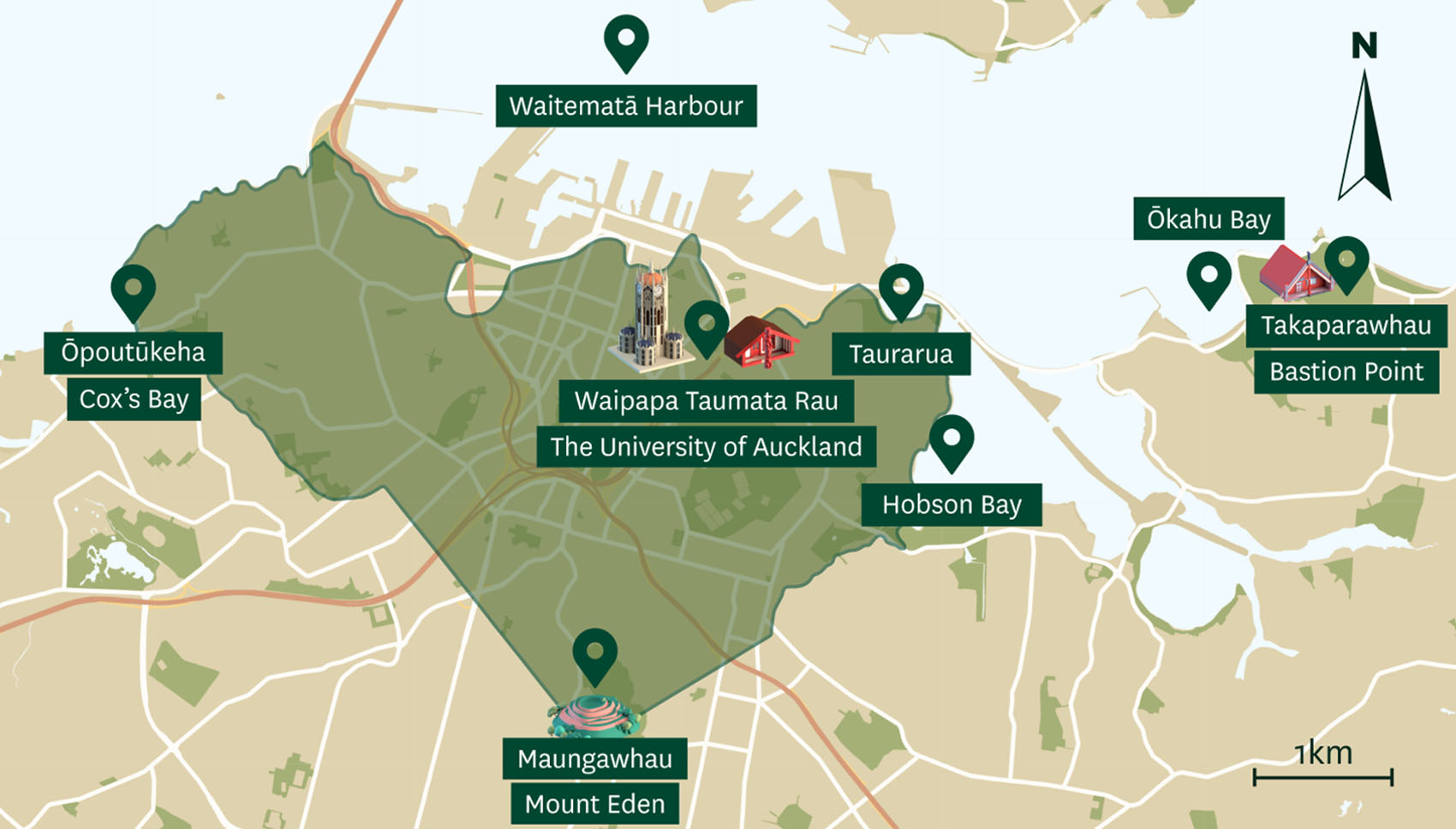
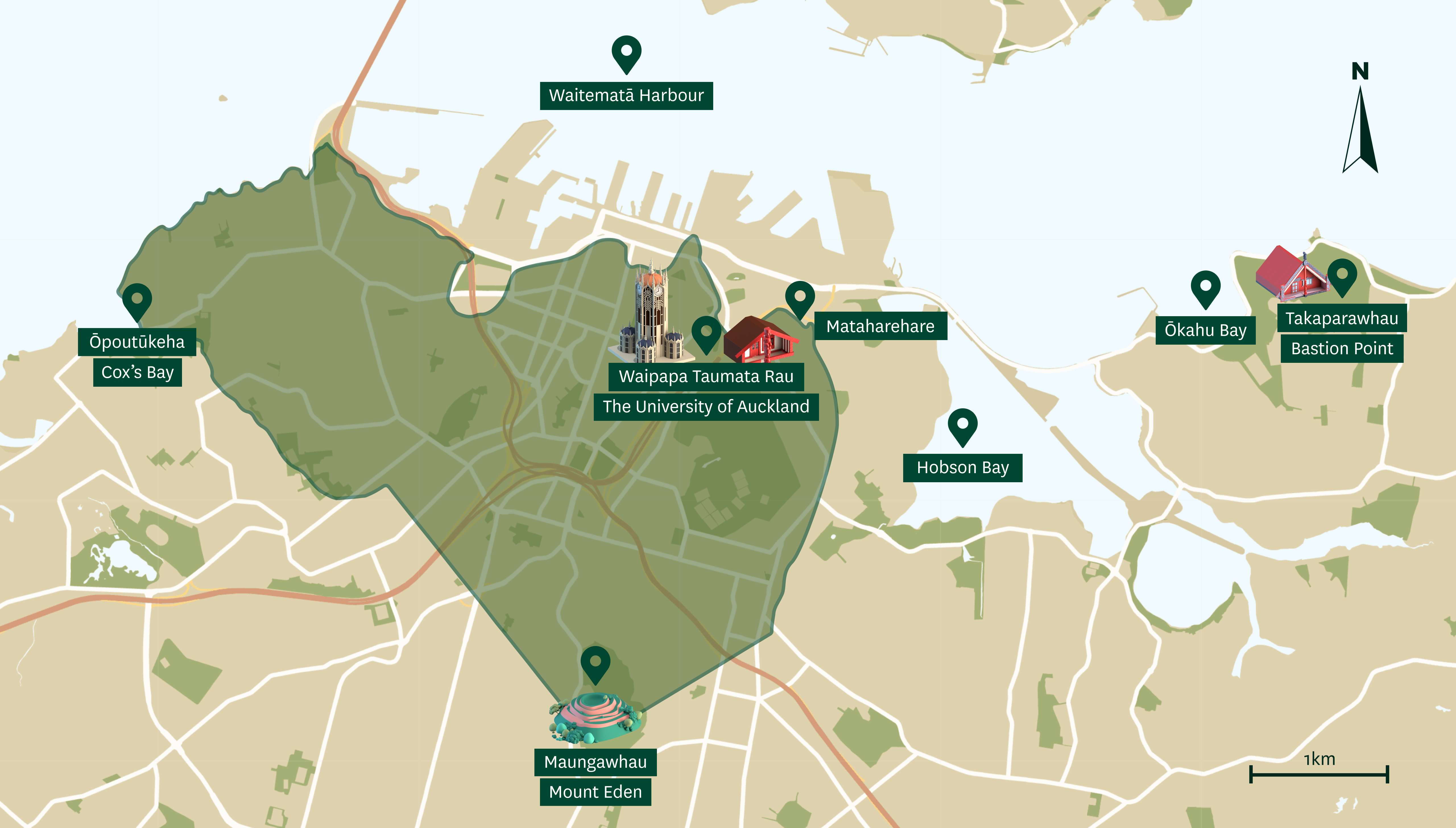
Some say that Te Kawau stood atop Maungawhau and stretched his arms out to Ōpoutūkeha (Cox’s Bay) and across to Ōrākei (Hobson Bay). But the original deed extends only to Mataharehare in the east.
Did you notice?
In the video, Margaret Kawharu reiterates Te Kawau’s statement that he did not sell Auckland to the Europeans in 1840, he gave it to them. Even though he gave the land as a gift, he is still ‘looking for payment’. Why?
For Māori, a land gift (tuku whenua) is a relational action. Payment, for Te Kawau, refers to the expected response from the Crown, which is a positive enduring relationship with Ngāti Whātua Ōrākei.
E kore e riro te whatutoto o Te Kawau e!
The heartblood (lands) of Te Kawau shall never be lost!
This is a famous Ngāti Whātua Ōrākei whakataukī. Whakataukī are significant sayings that provide insight and inspiration. This whakataukī reminds everyone that Te Kawau’s land gift did not – and will never – alienate the land from Ngāti Whātua Ōrākei. It remains our whenua (our land) forever.
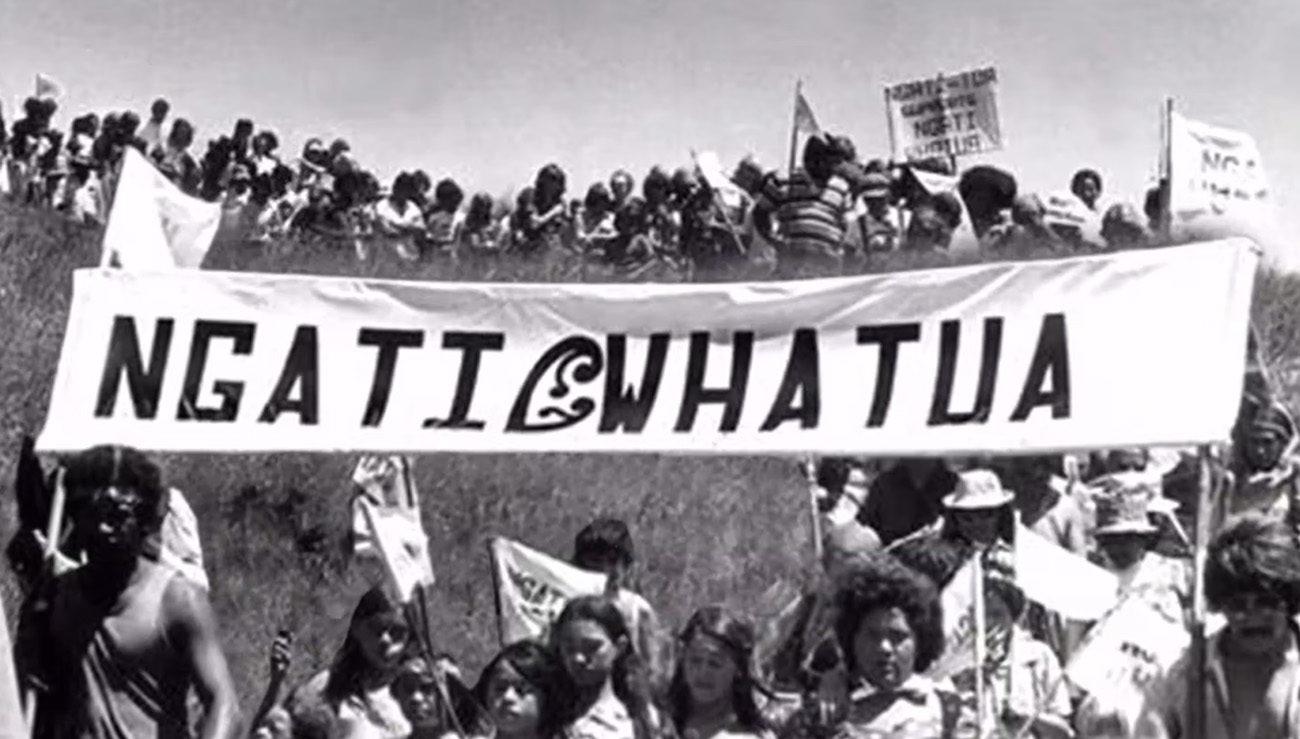
Ngāti Whātua Ōrākei suffered significantly under colonisation but we have actively protested and resisted these injustices.